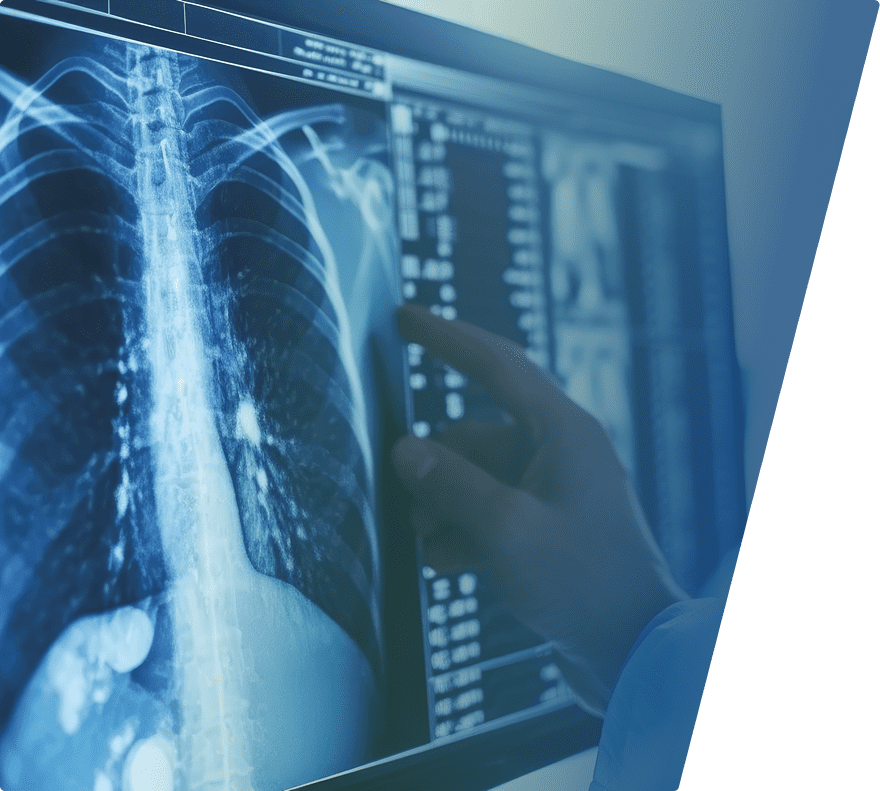
Pleural mesothelioma is a malignant cancer that develops in the pleura, the thin layer of tissue that surrounds your lungs and lines the inside of your chest wall. Like other types of mesothelioma, this particular form of the disease gets its name because of where it is formed — in the pleura. It is the most common type of mesothelioma.
It often takes decades (20 to 50 years) for mesothelioma to develop after someone is first exposed to asbestos. This lag time — called a latency period — explains why the disease usually affects older people.
What Are the Types of Pleural Mesothelioma?
This refers to the microscopic appearance of the cancer cells and can influence prognosis and treatment options. The main cell types are:
Epithelial Mesothelioma: Most common type (around 70% of cases), with cells resembling the surface lining tissues. It often responds better to treatment compared to other types.
Sarcomatoid Mesothelioma: Less common (10-20% of cases), with cells having an irregular, spindle-shaped appearance. This type is generally more aggressive and harder to treat.
Biphasic Mesothelioma: A combination of both epithelial and sarcomatoid cells (around 30-40% of cases). The aggressiveness depends on the proportion of each cell type.
Were you diagnosed with sarcomatoid mesothelioma? Contact us onlineor call 844-857-SWMWto discuss your legal options with a member of our team.
The first symptoms of pleural mesothelioma typically include chest pain and shortness of breath. You may experience no symptoms at all in the first few stages of the cancer’s progression.
Symptoms of pleural mesothelioma include:
Chest pain
Shortness of breath
Lower back pain
Swollen face and arms
Persistent dry or raspy cough
Coughing up blood
Difficulty swallowing (later stages)
Fatigue
Fever
Unexplained weight loss
Night sweats
Diagnosing Sarcomatoid Mesothelioma
Two layers of tissue make up the lining around the lungs, known as the pleura. These tissues protect and support the lungs and other important structures of the chest. They also produce lubricating fluid between the two to help the lungs move smoothly as we breathe. The outer layer, the parietal pleura, lines the entire inside of the chest cavity. The inner layer, or visceral pleura, covers the lungs.
Mesothelioma commonly affects both layers of the pleura. The cancer generally forms in one layer and rapidly invades the other pleural layer, diaphragm, chest wall or lung. If the cancer reaches nearby glands called lymph nodes, it can metastasize, or spread, to other parts of the body. Pleural mesothelioma can be difficult to diagnose, since symptoms usually do not arise until long after the first exposure to asbestos. Since many diseases of the lungs and respiratory system have the same symptoms as pleural mesothelioma, doctors may mistake it for the flu or pneumonia.
Reliable Ways to Diagnose:
Diagnosing pleural mesothelioma can involve a multi-step process because early symptoms often mimic other conditions.
Medical History and Physical Exam
The doctor will discuss your symptoms and past medical history, including any potential asbestos exposure. A physical exam will assess for signs like chest pain or difficulty breathing.
Imaging Tests
Imaging techniques help visualize abnormalities in the chest cavity. These may include:
Chest X-ray: An initial screening tool to detect abnormalities like pleural effusion (fluid buildup) or pleural thickening.
CT Scan: Provides detailed cross-sectional images to pinpoint location and size of potential tumors.
PET Scan: Might be used to assess if cancer has spread to other parts of the body.
Fluid Analysis
If pleural effusion is present, the fluid may be withdrawn and analyzed for the presence of abnormal cells.
Biopsies
A definitive diagnosis usually requires a biopsy, where a tissue sample is collected for microscopic examination. Biopsy options include:
Thoracentesis: Doctors insert a hollow needle into the lungs to collect pleural fluid. Cell samples from the fluid are examined under a microscope to look for substances that indicate the presence of cancer. A thoracoscopic biopsy produces an accurate diagnosis in 98% of mesothelioma patients.
Surgical biopsy: In some cases, a more involved surgical procedure might be needed to obtain tissue.
If a series of tests or biopsies confirm the presence of mesothelioma, doctors develop a treatment plan based on the results. Similar diagnostic tests will be performed on different parts of the body for other forms of mesothelioma.
For example, even though similar imaging scans and biopsies are used to diagnose all types of mesothelioma, the part of the body that undergoes imaging or biopsy will differ for each type of mesothelioma. Because mesothelioma locally invades the body cavity in which it develops before spreading, doctors rarely have a hard time differentiating one form of mesothelioma from another. Only in late stage IV cases may there be enough spreading to or from the lung to the abdomen to question whether the cancer originated in the lining of the lungs or abdomen.
Blood Tests
Blood tests are not a primary diagnostic tool but might be used to check for general health or specific markers sometimes elevated in mesothelioma.
What Our Clients Say About Working With SWMW Law
At SWMW Law, we’re more than legal advocates — we’re a source of support during the most difficult times in our clients’ lives. We’re proud to be trusted by families across the country, and even prouder to share what they have to say about working with us.
“SWMW did an amazing job! They started the process with my father but during the process my father passed. They were so helpful when it came to us, his children, taking over in place of my dad. They answered every call and were extremely patient and supportive of us. They really did a great job with keeping us informed and educated. They fought for us. I would recommend them to anyone that hears the diagnosis of Mesothelioma. They will fight for you 100% of the way. Thank you SWMW Team for your support and patience! We truly appreciate all of you! – The Anderson’s”
I would personally like to thank you and your staff for how you’ve have helped me and my family with a bit of our loss. It doesn’t bring my dear wife back, but it helps relieve some of our daily stress as we push on. Thank you.
Everyone at SWMW Law have went above & beyond. They’ve been so compassionate & so very helpful. I really didn’t think I would be getting anything for my late husband. I feel like they have found every way possible to get something in the memory of my late husband. He didn’t deserve to pass the way he did, & SWMW Law are making sure his death wasn’t in vain. Ty you to Lyndsy & everyone who has put long hours into helping me. My deepest appreciation to you all.
I am very impressed with the quality of work that SWMW Law has done for me. All of my questions were answered quickly and everyone I had contact with were very kind and professional. I would highly recommend this law firm. Thanks to everyone at the firm for all that you have done for me.
I cannot say enough wonderful things about the SWMW Law Firm. This firm has a team of amazing, smart and professional attorneys and staff. They really care about their clients and go above and beyond to obtain justice. If I could give them more than 5 stars I would!! Thank you all for your incredible work that you do!
What Causes Pleural Mesothelioma?
In almost all cases, pleural mesothelioma is caused by asbestos exposure. Asbestos is a mineral that was once widely used in construction, shipbuilding, and other industries. When asbestos fibers are inhaled, they can become lodged in the pleura and irritate it. Over time, this irritation can lead to inflammation and scarring. In some cases, it can also lead to the development of cancer cells. Although the prognosis is typically poor, finding a pleural cancer specialist can diversify your treatment options and help improve your prognosis.
How Common is Pleural Mesothelioma?
Pleural mesothelioma is considered a rare cancer. Pleural mesothelioma accounts for about 75% of all mesothelioma cases. Around 3,000 new cases are diagnosed annually in the United States, this translates to roughly 1 case per 110,000 people. There has been a decrease of that diagnoses in the US since the 2000s, likely due to reduced asbestos exposure regulations.
Treatment Options for Pleural Mesothelioma
Forming in the protective lining surrounding the lungs, pleura mesothelioma is often not diagnosed until it has progressed. The treatment options for pleural mesothelioma include:
Surgery
Pleura mesothelioma is formed in the lining around the lungs and is therefore shielded by the rib cage, meaning that reaching it through surgery can require invasively cutting through bone. Surgery can be curative in some early-stage cases, aiming to remove all or part of the tumor.
Surgery Options:
Pleurectomy/decortication (Pleurectomy): Removes the lining of the lung (pleura) and the diaphragm surrounding the tumor.
Extrapleural pneumonectomy: Removes the entire lung and surrounding tissue.
Radiation Therapy
Radiation in the treatment of pleural mesothelioma has proved to be useful in conjunction with EPP.
Uses high-energy rays to kill cancer cells or shrink tumors.
Can be used alone or combined with other therapies.
Two main types:
External beam radiation therapy: Delivers radiation from a machine outside the body.
Internal radiation therapy (brachytherapy): Places radioactive implants near the tumor.
It should be noted that the types of radiation that should be used are currently under investigation.
Chemotherapy
Chemotherapy used in the treatment of pleural mesothelioma is not a cure, yet it can still provide some benefit to a mesothelioma patient. Studies suggest that chemotherapy treatments can result in the reduction of tumors and extend life. Chemotherapy has also been shown to palliate symptoms, including reducing shortness of breath, reduction of effusions, reduction of pain and improvement has been noted in quality of life studies.
Uses powerful drugs to kill cancer cells throughout the body.
Often combined with other treatments.
Common drugs for pleural mesothelioma: Pemetrexed, Cisplatin, Carboplatin.
Immunotherapy
A relatively new approach that helps the body’s immune system recognize and attack cancer cells.
May be an option for some patients, especially those with specific mesothelioma subtypes.
Targeted Therapy
Targets specific molecules involved in cancer cell growth and survival.
Still under investigation for pleural mesothelioma, but some ongoing clinical trials are exploring its potential.
Palliative Care
Focuses on managing symptoms and improving quality of life, regardless of whether a cure is possible.
Can include pain management, medication to manage shortness of breath, and emotional support.
Clinical Trials
Clinical trials are research studies that test new and promising mesothelioma treatments. Participating in a clinical trial could give access to innovative therapies while contributing to medical advancements.
Is There a Cure for Pleural Mesothelioma?
Unfortunately, there is currently no cure for pleural mesothelioma. Researchers are persistently working toward the discovery of a cure. There are pleural mesothelioma treatment options, however, that can greatly improve a person’s quality and length of life without fully curing the mesothelioma.
What are the Stages of Pleural Mesothelioma?
Stages of Pleural Mesothelioma are categorized based on the extent of cancer spread. Doctors use the TNM staging system to classify mesothelioma. There are four stages of mesothelioma that doctors use to describe how far the cancer has progressed.
Stage 1: Early stage. Tumor is localized to the pleura lining of one lung and has not spread to other tissues or lymph nodes.
Stage 2: Cancer has spread to nearby structures, such as the diaphragm, chest wall, or lymph nodes on the same side of the chest as the tumor.
Stage 3: Cancer has spread to lymph nodes on both sides of the chest or to other nearby organs, such as the pericardium (lining around the heart) or the lining of the abdomen.
Stage 4: The most advanced stage. Cancer has spread to distant organs, such as the liver, bones, or the other lung.
For many people, unfortunately, symptoms are not noticeable until the cancer is in a later stage — stage III or IV.
What is the Life Expectancy with Pleural Mesothelioma?
With treatment, the average life expectancy of someone with pleural mesothelioma is less than 18 months, but some patients live much longer.
Factors affecting expectancy: Several factors influence prognosis, including
Stage of diagnosis: Early detection offers a better chance.
Overall health: Younger and healthier patients tend to fare better.
Treatment options: Certain procedures and therapies can extend life.
Importance of treatment: While there’s no cure, treatment significantly impacts life expectancy. Without treatment, the average drops to 4-12 months.
Individual variability: Some patients diagnosed with pleural mesothelioma live much longer, exceeding 5 years or even 10 years.
Why Is It Difficult to Confirm a Pleural Mesothelioma Diagnosis?
While doctors may suspect mesothelioma based on a patient’s symptoms, history of asbestos exposure and irregular imaging scan results, these signs are not enough to confirm a diagnosis.
It is challenging for doctors to diagnose pleural mesothelioma for several reasons:
Non-specific symptoms: Early signs of pleural mesothelioma, like chest pain and shortness of breath, are often vague and can mimic other, more common conditions. This can lead to delays in diagnosis as other possibilities are explored first.
Long latency period: It can take decades for mesothelioma to develop after initial asbestos exposure. This means symptoms might not appear until years after the window of highest risk has passed, making it harder to link the current condition to past exposure.
Similar appearance to other cancers: Under a microscope, mesothelioma cells can sometimes closely resemble cells from other cancers, particularly lung cancer. This necessitates specialized testing and analysis to ensure an accurate diagnosis.
Difficulty obtaining tissue samples: Early-stage tumors might be very small or located in hard-to-reach areas of the chest cavity. Obtaining sufficient tissue for a conclusive biopsy can be challenging in some cases.
The Importance of Early Diagnosis
Early detection offers a better chance of successful treatment and improved prognosis. Here are several reasons an early diagnosis is critical for pleural mesothelioma:
Improved treatment options: Early-stage mesothelioma is generally confined to the pleura, allowing for more aggressive treatment approaches. This might include surgical resection (removal) of the tumor, which can potentially offer a cure in some cases. Later stages, where the cancer has spread, often rely on palliative care focused on managing symptoms and improving quality of life.
Increased effectiveness of treatment: Early intervention with surgery, radiation, or chemotherapy has a higher chance of success when the cancer is less extensive. These treatments can be more effective at shrinking tumors and controlling the disease when it’s caught earlier.
Enhanced prognosis: Studies have shown a clear link between earlier diagnosis and a better prognosis for pleural mesothelioma. Early detection offers a greater chance of achieving longer remission and improved survival rates.
Better quality of life: Early diagnosis and treatment can potentially help patients maintain a higher quality of life for longer. Treatment side effects might be more manageable when the cancer is less advanced.
If you have concerning symptoms or a history of asbestos exposure, discussing it with your doctor is crucial for prompt diagnosis and timely intervention.
Because we are different
Decades of Experience
Our team is comprised of dozens of highly talented and experienced attorneys ready to fight for your best outcome.
Thousands of Clients Represented
Over the course of our firm’s experience, we have helped thousands of victims and their families recover life-changing verdicts and settlements.
Nationwide Representation
We come to you wherever you are in the United States.
Resources + Personal Attention
A senior partner of our firm will be involved in your case, utilizing a team approach with massive resources uniquely applied to your case.
Free Consultations Available 24/7
Whether you have questions or you’re ready to get started, our legal team is ready to help. Complete our form below or call us at 844-857-SWMW.