

List of U.S. Navy Ships with Asbestos
Which U.S. Navy Ships Had Asbestos?

At a Glance: Navy Ships and Asbestos Exposure
- Over 3,300 Navy ships built between 1930 and the early 1980s contained asbestos materials
- Navy veterans face more than double the expected mesothelioma mortality rate compared to civilians, according to research published in the International Journal of Radiation Biology
- High-risk Navy jobs (machinist’s mates, boiler technicians, pipefitters) faced exposure rates over six times higher than the general population, based on a 2019 study of 114,000 Navy veterans
- Every ship commissioned between 1930-1970 contained several tons of asbestos insulation
- Submarines posed the highest risk due to confined spaces and recirculated air spreading asbestos fibers
- 20-50 years typically pass between asbestos exposure and mesothelioma diagnosis, according to medical research
- Multiple compensation sources are available: VA benefits, lawsuits against manufacturers, and asbestos trust funds
- No statute of limitations applies to VA disability claims for asbestos-related diseases
Why Navy Ships Contained Asbestos
The U.S. Navy became one of the largest consumers of asbestos by the early 1900s, and asbestos use in naval vessels became standard practice by the late 1930s. The mineral’s unique properties made it seem ideal for maritime applications.
Asbestos is naturally fire-resistant, provides excellent insulation, and withstands extreme temperatures and corrosion. For ships where engine rooms reached scorching temperatures and fire posed a constant threat, these characteristics appeared invaluable. Large battleships like the Iowa-class vessels contained hundreds of tons of asbestos insulation in their boiler rooms, engine spaces, and throughout the ship, while even smaller destroyers contained dozens of tons of asbestos materials.
Hundreds of different asbestos-containing products were used throughout naval vessels. Pipe insulation, gaskets, boiler linings, deck tiles, electrical components, and countless other parts contained asbestos fibers. The Navy used asbestos in engine rooms, boiler rooms, pump rooms, mess halls, sleeping quarters, and virtually every other space on board.
The Navy knew about the dangers early on. Despite a 1939 Navy Surgeon General report identifying asbestos hazards at Navy shipyards, protective measures were not widely implemented for decades. Sailors worked without respirators, and historical accounts from World War II-era shipyard workers describe working in clouds of asbestos dust with no respiratory protection.
The U.S. Navy began phasing out asbestos in new ship construction in the early 1970s, though existing vessels continued to contain asbestos materials for years. Ships constructed before the mid-1980s likely contained some asbestos materials, as the complete phase-out occurred gradually over more than a decade. For decades, the military prioritized performance over safety, and Navy veterans paid the price.
Comprehensive List of U.S. Navy Ships with Asbestos
The following sections identify Navy ships known to contain asbestos, organized by vessel type. This list focuses on the most well-documented vessels, though nearly all ships built during the identified time periods contained asbestos materials.
Aircraft Carriers
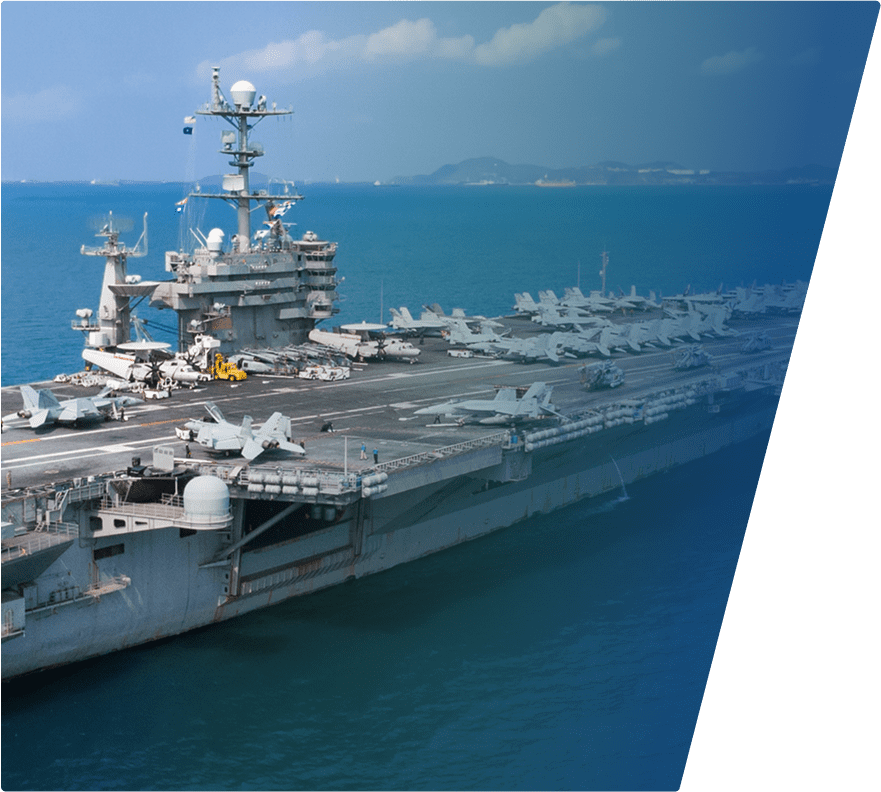
Aircraft carriers represented some of the Navy’s largest vessels and contained massive amounts of asbestos throughout their structures. Nearly every carrier commissioned between 1930 and 1980 exposed crews to asbestos.
| Ship Name | Hull Number | Service Era | Notes |
|---|---|---|---|
| USS Enterprise | CV-6 | 1938-1947 | WWII carrier |
| USS Lexington | CV-2 | 1927-1942 | Sunk at Coral Sea |
| USS Saratoga | CV-3 | 1927-1946 | Pre-WWII carrier |
| USS Yorktown | CV-5 | 1937-1942 | Sunk at Midway |
| USS Wasp | CV-7 | 1940-1942 | Torpedoed in 1942 |
| USS Hornet | CV-8 | 1941-1942 | Sunk at Santa Cruz |
| USS Essex | CV-9 | 1942-1969 | Essex-class lead ship |
| USS Yorktown | CV-10 | 1943-1970 | Now museum ship |
| USS Intrepid | CV-11 | 1943-1974 | Now museum ship |
| USS Hornet | CV-12 | 1943-1970 | Second USS Hornet |
| USS Franklin | CV-13 | 1944-1947 | Heavily damaged in WWII |
| USS Ticonderoga | CV-14 | 1944-1973 | Essex-class |
| USS Randolph | CV-15 | 1944-1969 | Essex-class |
| USS Lexington | CV-16 | 1943-1991 | Second USS Lexington |
| USS Bunker Hill | CV-17 | 1943-1966 | Essex-class |
| USS Wasp | CV-18 | 1943-1972 | Second USS Wasp |
| USS Hancock | CV-19 | 1944-1976 | Essex-class |
| USS Bennington | CV-20 | 1944-1970 | Essex-class |
| USS Boxer | CV-21 | 1945-1969 | Essex-class |
| USS Bon Homme Richard | CV-31 | 1944-1971 | Essex-class |
| USS Leyte | CV-32 | 1946-1959 | Essex-class |
| USS Kearsarge | CV-33 | 1946-1970 | Essex-class |
| USS Oriskany | CV-34 | 1950-1976 | Essex-class |
| USS Antietam | CV-36 | 1945-1963 | Essex-class |
| USS Princeton | CV-37 | 1945-1970 | Essex-class |
| USS Shangri-la | CV-38 | 1944-1971 | Essex-class |
| USS Lake Champlain | CV-39 | 1945-1966 | Essex-class |
| USS Tarawa | CV-40 | 1945-1960 | Essex-class |
| USS Midway | CVB-41 | 1945-1992 | Now museum ship |
| USS Franklin D. Roosevelt | CVB-42 | 1945-1977 | Midway-class |
| USS Coral Sea | CVB-43 | 1947-1990 | Midway-class |
| USS Philippine Sea | CV-47 | 1946-1958 | Essex-class |
| USS Forrestal | CV-59 | 1955-1993 | Forrestal-class lead ship |
| USS Saratoga | CV-60 | 1956-1994 | Forrestal-class |
| USS Ranger | CV-61 | 1957-1993 | Forrestal-class |
| USS Independence | CV-62 | 1959-1998 | Forrestal-class |
| USS Kitty Hawk | CV-63 | 1961-2009 | Kitty Hawk-class |
| USS Constellation | CV-64 | 1961-2003 | Kitty Hawk-class |
| USS Enterprise | CVN-65 | 1961-2012 | First nuclear carrier |
| USS America | CV-66 | 1965-1996 | Kitty Hawk-class |
| USS John F. Kennedy | CV-67 | 1968-2007 | Modified Kitty Hawk |
| USS Nimitz | CVN-68 | 1975-present | Nuclear carrier |
| USS Dwight D. Eisenhower | CVN-69 | 1977-present | Nimitz-class |
| USS Carl Vinson | CVN-70 | 1982-present | Nimitz-class |
| Ship Name | Hull Number | Service Era |
| USS Independence | CVL-22 | 1943-1951 |
| USS Princeton | CVL-23 | 1943-1944 |
| USS Belleau Wood | CVL-24 | 1943-1960 |
| USS Cowpens | CVL-25 | 1943-1959 |
| USS Monterey | CVL-26 | 1943-1956 |
| USS Langley | CVL-27 | 1943-1947 |
| USS Cabot | CVL-28 | 1943-1955 |
| USS Bataan | CVL-29 | 1943-1954 |
| USS San Jacinto | CVL-30 | 1943-1947 |
| Ship Name | Hull Number | Service Era | Notes |
| USS Texas | BB-35 | 1914-1948 | Now museum ship |
| USS New York | BB-34 | 1914-1946 | WWI-WWII service |
| USS Arkansas | BB-33 | 1912-1946 | WWI-WWII service |
| USS Nevada | BB-36 | 1916-1948 | Pearl Harbor survivor |
| USS Oklahoma | BB-37 | 1916-1944 | Sunk at Pearl Harbor |
| USS Pennsylvania | BB-38 | 1916-1948 | Pearl Harbor survivor |
| USS Arizona | BB-39 | 1916-1941 | Sunk at Pearl Harbor |
| USS New Mexico | BB-40 | 1918-1946 | WWII service |
| USS Mississippi | BB-41 | 1917-1956 | WWII service |
| USS Idaho | BB-42 | 1919-1946 | WWII service |
| USS Tennessee | BB-43 | 1920-1947 | Pearl Harbor survivor |
| USS California | BB-44 | 1921-1947 | Pearl Harbor survivor |
| USS Colorado | BB-45 | 1923-1947 | WWII service |
| USS Maryland | BB-46 | 1921-1947 | Pearl Harbor survivor |
| USS West Virginia | BB-48 | 1923-1947 | Pearl Harbor survivor |
| USS North Carolina | BB-55 | 1941-1947 | Now museum ship |
| USS Washington | BB-56 | 1941-1947 | WWII service |
| USS South Dakota | BB-57 | 1942-1947 | WWII service |
| USS Indiana | BB-58 | 1942-1947 | WWII service |
| USS Massachusetts | BB-59 | 1942-1947 | Now museum ship |
| USS Alabama | BB-60 | 1942-1947 | Now museum ship |
| USS Iowa | BB-61 | 1943-1990 | Now museum ship |
| USS New Jersey | BB-62 | 1943-1991 | Now museum ship |
| USS Missouri | BB-63 | 1944-1992 | Now museum ship |
| USS Wisconsin | BB-64 | 1944-1991 | Now museum ship |
The Navy operated over 100 cruisers during this period, including heavy cruisers, light cruisers, and guided missile cruisers. All contained asbestos materials.
Heavy Cruisers (CA):
| Ship Name | Hull Number | Service Era |
|---|---|---|
| USS Chester | CA-27 | 1930-1946 |
| USS Astoria | CA-34 | 1934-1942 |
| USS Indianapolis | CA-35 | 1932-1945 |
| USS Baltimore | CA-68 | 1943-1956 |
| USS Boston | CA-69 | 1943-1970 |
| USS Canberra | CA-70 | 1943-1970 |
| USS Quincy | CA-71 | 1943-1954 |
| USS St. Paul | CA-73 | 1945-1971 |
| USS Des Moines | CA-134 | 1948-1961 |
| USS Toledo | CA-133 | 1946-1960 |
| USS Los Angeles | CA-135 | 1945-1963 |
| USS Salem | CA-139 | 1949-1959 |
| USS Newport News | CA-148 | 1949-1975 |
Guided Missile Cruisers (CG/CGN):
| Ship Name | Hull Number | Service Era |
| USS Long Beach | CGN-9 | 1961-1995 |
| USS Albany | CG-10 | 1962-1980 |
| USS Chicago | CG-11 | 1964-1980 |
| USS Leahy | CG-16 | 1962-1993 |
| USS Gridley | CG-21 | 1963-1994 |
| USS England | CG-22 | 1963-1994 |
| USS Bainbridge | CGN-25 | 1962-1996 |
| USS Belknap | CG-26 | 1964-1995 |
| USS Jouett | CG-29 | 1966-1994 |
| USS California | CGN-36 | 1974-1999 |
| USS South Carolina | CGN-37 | 1975-1999 |
| USS Arkansas | CGN-41 | 1980-1998 |
The Navy operated over 900 destroyers between 1930 and 1980. Below is a representative sample of destroyers with documented asbestos exposure across different classes.
Fletcher-Class Destroyers (175 built):
| Ship Name | Hull Number | Service Era |
| USS Fletcher | DD-445 | 1942-1969 |
| USS Abner Read | DD-526 | 1943-1944 |
| USS The Sullivans | DD-537 | 1943-1965 |
| USS Dyson | DD-572 | 1943-1946 |
| USS Kidd | DD-661 | 1943-1964 |
| USS Cassin Young | DD-793 | 1943-1960 |
Allen M. Sumner-Class Destroyers (58 built):
| Ship Name | Hull Number | Service Era |
| USS Allen M. Sumner | DD-692 | 1944-1973 |
| USS Laffey | DD-724 | 1944-1975 |
| USS John A. Bole | DD-755 | 1944-1973 |
| USS Aaron Ward | DD-773 | 1944-1960 |
Gearing-Class Destroyers (98 built):
| Ship Name | Hull Number | Service Era |
| USS Gearing | DD-710 | 1945-1973 |
| USS Frank Knox | DD-742 | 1944-1971 |
| USS Basilone | DD-824 | 1949-1977 |
| USS Agerholm | DD-826 | 1946-1973 |
| USS Ernest G. Small | DD-838 | 1945-1973 |
| USS Witek | DD-848 | 1945-1972 |
| USS Arnold J. Isbell | DD-869 | 1945-1974 |
| USS Damato | DD-871 | 1945-1974 |
| USS Stickell | DD-888 | 1945-1972 |
Forrest Sherman-Class Destroyers (18 built):
| Ship Name | Hull Number | Service Era |
| USS Forrest Sherman | DD-931 | 1955-1982 |
| USS Barry | DD-933 | 1956-1982 |
| USS Turner Joy | DD-951 | 1959-1982 |
| USS Barney | DD-956 | 1956-1983 |
Spruance-Class Destroyers (31 built):
| Ship Name | Hull Number | Service Era |
| USS Spruance | DD-963 | 1975-2005 |
| USS Oldendorf | DD-972 | 1977-2003 |
Nearly 400 submarines built before 1980 contained asbestos. Submarines posed the highest exposure risk due to confined spaces where asbestos fibers could not dissipate and recirculated air spread contamination throughout the vessel.
Balao-Class Submarines (120 built):
| Ship Name | Hull Number | Service Era |
| USS Balao | SS-285 | 1943-1963 |
Nuclear Submarines:
| Ship Name | Hull Number | Class | Service Era |
| USS Nautilus | SSN-571 | Nautilus | 1954-1980 |
| USS Seawolf | SSN-575 | Seawolf | 1957-1987 |
| USS George Washington | SSBN-598 | George Washington | 1959-1985 |
| USS Abraham Lincoln | SSBN-602 | George Washington | 1961-1981 |
| USS Haddo | SSN-604 | Permit | 1962-1991 |
| USS Flasher | SSN-613 | Permit | 1966-1992 |
| USS Finback | SSN-670 | Sturgeon | 1970-1997 |
| USS Tunny | SSN-682 | Sturgeon | 1974-1997 |
| USS Parche | SSN-683 | Sturgeon | 1974-2004 |
| USS Memphis | SSN-691 | Los Angeles | 1977-2011 |
| USS Groton | SSN-694 | Los Angeles | 1978-1997 |
| USS Birmingham | SSN-695 | Los Angeles | 1978-2010 |
| USS Bremerton | SSN-698 | Los Angeles | 1981-2007 |
| USS Jacksonville | SSN-699 | Los Angeles | 1981-2012 |
| USS Dallas | SSN-700 | Los Angeles | 1981-2018 |
| USS La Jolla | SSN-701 | Los Angeles | 1981-2014 |
| USS San Francisco | SSN-711 | Los Angeles | 1981-present |
Ballistic Missile Submarines:
| Ship Name | Hull Number | Service Era |
| USS Casimir Pulaski | SSBN-633 | 1964-1994 |
| USS Von Steuben | SSBN-632 | 1964-1994 |
Amphibious assault ships, landing ships, and transport vessels all contained asbestos materials.
| Ship Name | Hull Number | Type | Service Era |
| USS Iwo Jima | LPH-2 | Amphibious assault | 1961-1993 |
| USS Guam | LPH-9 | Amphibious assault | 1965-1998 |
| USS Tarawa | LHA-1 | Amphibious assault | 1976-2009 |
| USS New Orleans | LPH-11 | Amphibious assault | 1968-1997 |
| USS El Paso | LKA-117 | Cargo ship | 1970-1994 |
| USS Trousdale | APD-79 | High-speed transport | 1944-1967 |
Coast Guard vessels built during this period also contained asbestos materials.
| Cutter Name | Hull Number | Service Era |
| USCGC Bibb | WPG-31 | 1937-1985 |
| USCGC Campbell | WPG-32 | 1936-1982 |
| USCGC Ingham | WPG-35 | 1936-1988 |
| USCGC Hamilton | WHEC-715 | 1967-2011 |
| USCGC Dallas | WHEC-716 | 1967-2010 |
| USCGC Rush | WHEC-723 | 1969-2015 |
| USCGC Jarvis | WHEC-725 | 1972-2013 |
| USCGC Dauntless | WMEC-624 | 1968-2003 |
What Our Clients Say About Working With SWMW Law

Call For a FREE Consultation
SWMW Law is dedicated to helping victims and families in the fight against corporations that care more about profits than people. Comprised of award-winning attorneys, our team has helped clients take on powerful defendants in courts across the country and has helped countless victims and families secure the justice and compensation they deserved.
If you have questions about an asbestos claim involving work in the shipyard industry, call 844-857-SWMW.
Where Asbestos Was Found on Navy Ships
Understanding where asbestos was located on ships helps veterans recognize their exposure risk and provides valuable evidence for legal claims.
- Mess Halls and Galleys: Ceiling tiles, floor tiles, wall insulation, and cooking equipment insulation all contained asbestos. Sailors spent hours daily in these spaces eating meals and relaxing.
- Sleeping Quarters: Asbestos-wrapped pipes ran through berthing areas, and ceiling tiles contained asbestos fibers. The ventilation systems could spread fibers from machinery spaces throughout living areas.
- Electrical Rooms: Wiring, conduit, and electrical panels used asbestos insulation for fire resistance.


High-Risk Navy Jobs and Ratings
Certain Navy occupational specialties faced significantly higher asbestos exposure than others. A comprehensive study published in the International Journal of Radiation Biology in 2019 examined 114,000 Navy veterans and found striking differences in mesothelioma mortality rates by job rating.
The following ratings demonstrated a standardized mortality ratio (SMR) of 6.47 for mesothelioma, meaning these sailors faced over six times the expected death rate from the disease:
Machinist’s Mates (MM):Maintained steam propulsion systems, pumps, valves, and turbines. Regularly replaced asbestos gaskets and worked in engine rooms with heavy asbestos insulation.
Boiler Technicians (BT): Operated and maintained ship boilers lined with asbestos. Wore asbestos gloves and worked with asbestos-containing gaskets, insulation, and coatings in the hottest, most hazardous spaces on the ship.
Pipefitters: Cut through asbestos-insulated pipes and installed new asbestos insulation during repairs and maintenance.
Fire Control Technicians (FT): Worked near asbestos-insulated fire control equipment and in confined spaces throughout ships.
Water Tenders: Assigned to boiler rooms with constant asbestos exposure from insulation and gaskets.
- Engineman (EN): Operated diesel and gasoline engines with asbestos components
- Hull Maintenance Technician (HT): Installed and repaired asbestos insulation, pipe gaskets, and valves
- Electrician’s Mate (EM): Handled asbestos-insulated wiring and electrical components
- Damage Controlman (DC): Coordinated repairs involving asbestos materials
- Gunner’s Mate (GM): Worked in asbestos-insulated ammunition rooms wearing asbestos gloves
- Boatswain’s Mate (BM): Performed deck maintenance on asbestos floor tiles and coatings
- Shipfitter (SF): Worked on pumps, valves, and steam lines in asbestos-insulated areas
Shipyard Workers
Shipyard workers building, repairing, and dismantling Navy ships faced the highest exposure levels of anyone. They cut and sawed raw asbestos for pipe insulation, installed and removed asbestos-containing parts, and worked in clouds of asbestos dust. Historical accounts from World War II-era shipyard workers describe working in asbestos dust so dense it obscured visibility in work areas.
Sites like Boston Naval Shipyard & Long Beach Naval Shipyard have seen many cases for both mesothelioma & lung cancer.
Compensation Options for Navy Veterans
If you developed mesothelioma or another asbestos-related disease after serving in the Navy, multiple sources of compensation may be available. You are not limited to just one option and can pursue several simultaneously.
The Department of Veterans Affairs provides disability compensation for veterans with service-connected asbestos-related diseases. Mesothelioma automatically qualifies for a 100% disability rating.
2025 VA disability compensation rates:
- Single veteran with mesothelioma: $3,831.30 per month
- Married veteran with mesothelioma: $4,044.91 per month
- Additional compensation for dependents
These payments are tax-free, and there is no statute of limitations for filing VA claims. Even if you left the service decades ago, you can still file for benefits.
The Sergeant First Class Heath Robinson Honoring our Promise to Address Comprehensive Toxics (PACT) Act, passed in 2022, expanded coverage for respiratory cancers and toxic exposure claims, making it easier for veterans to receive VA benefits for asbestos-related diseases.
Veterans can file lawsuits against the manufacturers of asbestos-containing products used on Navy ships. The Feres Doctrine prevents lawsuits against the U.S. government itself, but you can sue the private companies that knowingly supplied dangerous products to the military.
These companies knew about the dangers of asbestos for decades but concealed the risks to protect their profits. They continued selling asbestos products to the Navy even after internal documents showed the material caused cancer.
Mesothelioma compensation varies significantly based on individual case factors, including the severity of illness, extent of documented exposure, and the number of responsible parties identified. Successful claims can result in substantial awards.
- $11.5 million trial verdict for a U.S. Navy machinist mate with mesothelioma
- $4.4 million settlement for a U.S. Navy seaman and boiler operator with mesothelioma
- $2.2 million settlement for as U.S. Navy seaman with mesothelioma from Ohio
- $1.9 million million settlement for as U.S. Navy seaman with mesothelioma from Colorado
- $1.7 million settlement for a U.S. Navy seaman/laborer with mesothelioma from Tennessee
- $1.5 million settlement for a U.S. Navy seaman with mesothelioma from Missouri
- $1.5 million settlement for a U.S. Navy seaman with mesothelioma from Oregon
- $1.4 million settlement for a U.S. Navy shipfitter with mesothelioma from Ohio
- $1.2 million settlement for a U.S. navy seaman/machine operator with mesothelioma from Missouri
- $1.2 million settlement for a U.S. Navy seaman with mesothelioma from Louisiana
- $1.2 million settlement for a U.S. Navy seaman with mesothelioma from Oklahoma
- $1.1 million settlement for a U.S. Navy seaman with mesothelioma from Arkansas
- $1.1 million settlement for a U.S. Navy seaman/laborer with mesothelioma from Indiana
- $725,000 settlement for a shipyard worker and mechanic with lung cancer
- $675,000 settlement for a shipyard and refinery worker with lung cancer
Individual results vary based on case-specific factors. Every case is different and must be judged on its own merits. Past results do not guarantee future outcomes.
Filing a lawsuit does not affect your VA benefits. You can receive compensation from both sources.



Asbestos Trust Funds
Many asbestos manufacturers filed for bankruptcy due to the overwhelming number of claims against them. As part of the bankruptcy process, they were required to establish trust funds to compensate victims. Congressional testimony and government reports confirm that billions of dollars remain available in asbestos bankruptcy trusts for victim compensation.
Trust fund claims are often resolved faster than lawsuits, sometimes within months rather than years. Major asbestos trust funds established through bankruptcy proceedings include:
- Johns-Manville Corporation: $2.5 billion trust
- Owens Corning: $3.42 billion trust
- Pittsburgh Corning: $825 million trust
- W.R. Grace & Co.: $3 billion trust
Your attorney can file claims with multiple trust funds simultaneously, maximizing your total compensation.
Timeline Considerations
State statutes of limitations for asbestos lawsuits typically range from one to six years from the date of diagnosis. This makes it critical to contact an attorney soon after receiving a mesothelioma diagnosis.
However, the clock doesn’t start until you receive your diagnosis, not when you were exposed to asbestos. This “discovery rule” protects veterans whose diseases develop decades after their service ended.
Why Choose SWMW Law for Your Asbestos Case?
Contact SWMW Law Today
- Phone: 844-857-SWMW
- Online: Complete our free case evaluation form
- Office Locations: Serving veterans nationwide
If you served in the U.S. Navy and have been diagnosed with mesothelioma or asbestos lung cancer, you deserve justice and compensation. The companies that manufactured asbestos products knew about the dangers but chose profits over people, and they must be held accountable.
At SWMW Law, we fight for Navy veterans who dedicated their lives to serving our country and now face devastating diagnoses through no fault of their own. We understand the sacrifice you made, and we’re committed to helping you and your family during this difficult time.
Your fight is our fight. Because people matter.
You served your country. Now let us serve you.
Disclaimer: The choice of a lawyer is an important decision and should not be based solely upon advertisements. Past results afford no guarantee of future results or similar outcomes. Every case is different and must be judged on its own merits. This information is not intended to create, and receipt or viewing does not constitute, an attorney-client relationship.



Frequently Asked Questions
Because we are different

Decades of
Experience
Our team is comprised of dozens of highly talented and experienced attorneys ready to fight for your best outcome.

Thousands of Clients Represented
Over the course of our firm’s experience, we have helped thousands of victims and their families recover life-changing verdicts and settlements.

Nationwide
Representation
We come to you wherever you are in the United States.

Resources + Personal Attention
A senior partner of our firm will be involved in your case, utilizing a team approach with massive resources uniquely applied to your case.