
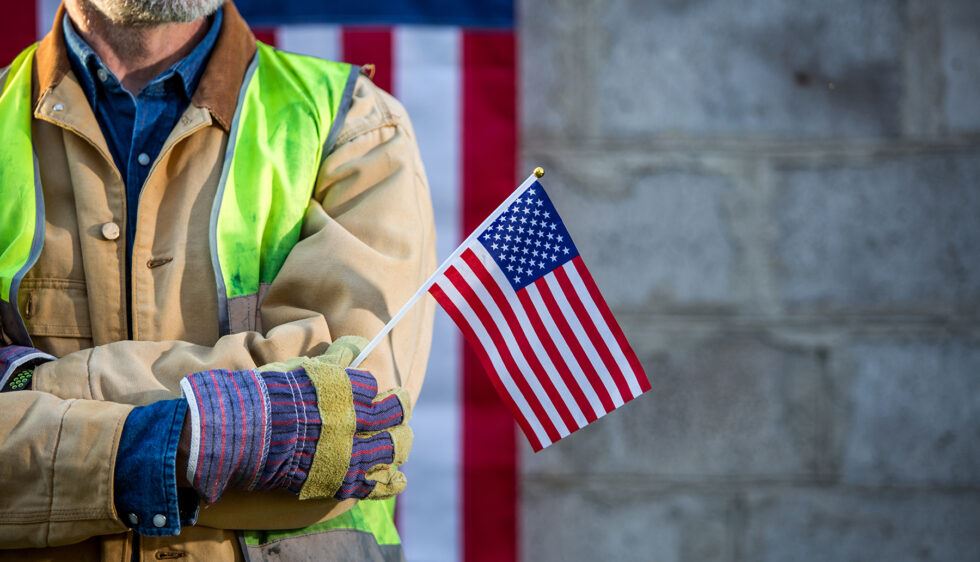
As a firm that’s fought for countless families who have lost loved ones to occupational asbestos exposure, SWMW Law is proud to recognize Workers Memorial Day.
Observed on the same day the Occupational Safety and Health Act went into effect in 1971 – April 28th – Workers Memorial Day was established to remember workers who died on the job or suffered exposures to work-related hazards that led to their deaths. Not only does this day of remembrance serve to honor the millions of workers who have died while at work, it’s also an opportunity to advocate for safer workplaces for all, especially those who have been injured, disabled, or made sick while on the job.
According to the American Federation of Labor and Congress of Industrial Organizations (AFL-CIO), since the passage of the Occupational Safety and Health Act, 647,000 workers’ lives have been saved. But the Bureau of Labor Statistics shows that unsafe workplaces were still the cause of 2.6 million injuries and illnesses in 2021, over 5,000 workplace fatalities, and an alarming increase in repository illnesses across all industries.
Today, we remember the millions of men and women who have died from occupational hazards, like asbestos exposure, and raise awareness about the need to continue the fight for the many others who still face hazardous working conditions and asbestos-related hazards that put their lives at risk.
The Legacy of Asbestos in the Workplace
The legacy of asbestos is one inextricably linked to the workplace and devastating consequences for millions of working men and women. That’s because asbestos was used in truly staggering quantities for much of the 20th century and posed the greatest risks to workers.
As the statistics show:
- Occupational asbestos exposure is the leading cause of work-related death in the industrialized world and the single greatest risk factor for mesothelioma.
- Between 1940 and 1979, an estimated 27 million American workers were exposed to asbestos on the job, putting them at risk for mesothelioma and other asbestos diseases.
Once hailed as a “miracle mineral,” asbestos was favored in a variety of industries, applications, and products because it was resistant to heat, fire, and chemicals. It was used in nearly every home and structure built before the 1980s and present throughout worksites in various building products, machinery, and equipment.
Unfortunately, workers have faced the brunt of health consequences caused by asbestos’ widespread use, which include devastating diseases like mesothelioma and lung cancer. This is particularly true of workers in at-risk occupations, which include professions in industries that heavily relied on asbestos to build, maintain, and operate essential systems and machinery, and many different trades that worked with asbestos-containing materials.
Historically, some of the most at-risk occupations for asbestos exposure have included:
- Insulators
- Boilermakers
- Construction workers
- Plumbers and pipefitters
- Steelworkers
- Electricians
- Shipyard workers
- Industrial workers
Workers who directly handled asbestos – and especially workers who cut, sawed, sanded, repaired, or otherwise disturbed asbestos-containing materials– faced the most significant exposure risks, as these activities are most likely to result in the dispersal of harmful asbestos fibers into the air that can be inhaled or ingested.
Sadly, even those who were not in at-risk occupations faced exposure risks. For example:
- Studies have documented exposure risks and mesothelioma diagnoses among clerks, receptionists, and other similar workers in facilities that contained asbestos or used processes that released large quantities of asbestos fibers into the air. One study, for instance, found that measurable quantities of asbestos fibers could be found as far as 75 feet away from sites where auto mechanics would blow out brake dust from wheel wells and brake components.
- Numerous military service members who served in the U.S. armed forces during peak years of asbestos use were exposed to asbestos in the course of their service. As a result, veterans comprise nearly a third of all mesothelioma claims filed each year. And while all branches used and relied on asbestos, none used more than the U.S. Navy.
- Research has shown that secondary asbestos exposure – which occurs when family and household members are exposed to asbestos brought into the home by an asbestos-exposed worker – is the leading cause of mesothelioma among women.
Occupational Asbestos Exposure Risks Today
Despite significant regulations and restrictions, millions of workers continue to face health risks posed by occupational asbestos exposure. These include:
- Workers exposed decades ago. Mesothelioma has a latency period of 20 to 50 years, which means that workers are typically diagnosed with this devastating disease decades after being exposed. As such, workers who were exposed to asbestos at times when it was heavily used and as it was being phased out at the end of the 20th century comprise a large portion of the 39,000 new mesothelioma diagnoses made every year in the U.S.
- Workers facing exposure risks today. Health risks didn’t cease when regulators began restricting asbestos use. In fact, many workers continue to face substantial risks of occupational asbestos exposure, largely in two ways:
- Permitted Asbestos Use. In the U.S., asbestos was permitted for importation and certain uses for decades after regulators implemented restrictions on the mineral in the late 1970s and early 1980s. Though there was a major victory earlier this year when the EPA issued a landmark Final Rule to finally ban chrysotile asbestos, long phaseout provisions will allow certain industries and facilities to continue using asbestos-containing materials for years to come.
- Legacy Asbestos. Most asbestos-exposed workers today are exposed to “legacy asbestos,” which is asbestos that remains present in materials and structures built or installed before widespread restrictions were implemented. This includes workers involved in demolishing, repairing, or remodeling older homes and buildings that contain asbestos, and workers who still service or operate machinery or equipment with asbestos-containing components. Legacy asbestos is the most concerning exposure source for modern-era workers, both because it remains in so many places and worksites and because aging and deteriorating asbestos-containing materials are more likely to disperse harmful fibers when disturbed.
Looking Forward in the Fight Against Occupational Asbestos Exposure
As we remember all those who have lost lives and loved ones to occupational asbestos exposure this Workers Memorial Day, we’re given an opportunity to help workers and families learn how they can respond to what’s already transpired and what can be done to improve workplace safety moving forward. For example:
- Asbestos claims. If history provides us with a lesson, it is that immense progress can be made when corporations are held accountable for causing harm. At SWMW Law, we’re dedicated to playing a pivotal role in fighting for corporate accountability by helping workers and families pursue justice and compensation for the harms and losses they’ve suffered due to occupational asbestos exposure. This includes helping victims navigate processes for filing claims with asbestos bankruptcy trusts established by asbestos companies that liquidated or reorganized and civil lawsuits brought against solvent companies that negligently exposed workers to asbestos.
- Improved workplace safety regulations. While the EPA’s historic Final Rule banning chrysotile asbestos will finally bring the U.S. on par with the more than 50 countries that have already prohibited asbestos, there is still much work to be done when it comes to protecting workers from risks of asbestos exposure today. A safer future will require us to push for improved asbestos exposure standards, regulations that compel employers to protect their workforce, and resources that enable workers to mitigate their risks.
- Improved data collection. Government agencies like the National Institute for Occupational Safety and Health (NIOSH) collect a great deal of data about work-related injuries and fatalities. And while their surveillance systems capture deaths resulting from work-related injuries, they notoriously fail to capture most deaths resulting from occupational illnesses.By improving how we report and collect data regarding work–related illnesses, and especially those involving mesothelioma and other asbestos-related health conditions, we can gain greater insight into causes and exposure sources and be better equipped to protect workers.
- A global ban. Though the risks of asbestos exposure may never be eliminated, as asbestos occurs naturally, the risks of exposure through work just might – even if that’s decades in the future. By keeping a goal to eliminate asbestos globally on the table, there’s less chance for letting up on progress or becoming complacent with the status quo. Of course, this will require significant efforts and mobilization from advocates, lawmakers, and all citizens alike – which makes raising awareness through observances like Workers Memorial Day all the more important.
Questions About Occupational Asbestos Exposure? SWMW Law Can Help.
Because being exposed to asbestos through work is the single greatest risk factor for mesothelioma, and a significant risk factor for diseases like lung cancer, past work in an at-risk occupation may provide the basis for a successful asbestos exposure claim.
At SWMW Law, our award-winning team is known nationally as a leader in the field of asbestos litigation. Backed by decades of experience and more than $750 million in verdicts and settlements recovered for clients, we have ample experience helping victims evaluate work histories to establish a record of occupational asbestos exposure and pursue the compensation they deserve.
If you have questions about your rights and legal options, call (855) 659-5031 or contact us online to. SWMW Law proudly serves clients nationwide, offers FREE consultations, and works on contingency, which means there’s no cost to hire and no fee unless we win.