
Signs And Symptoms Of Mesothelioma

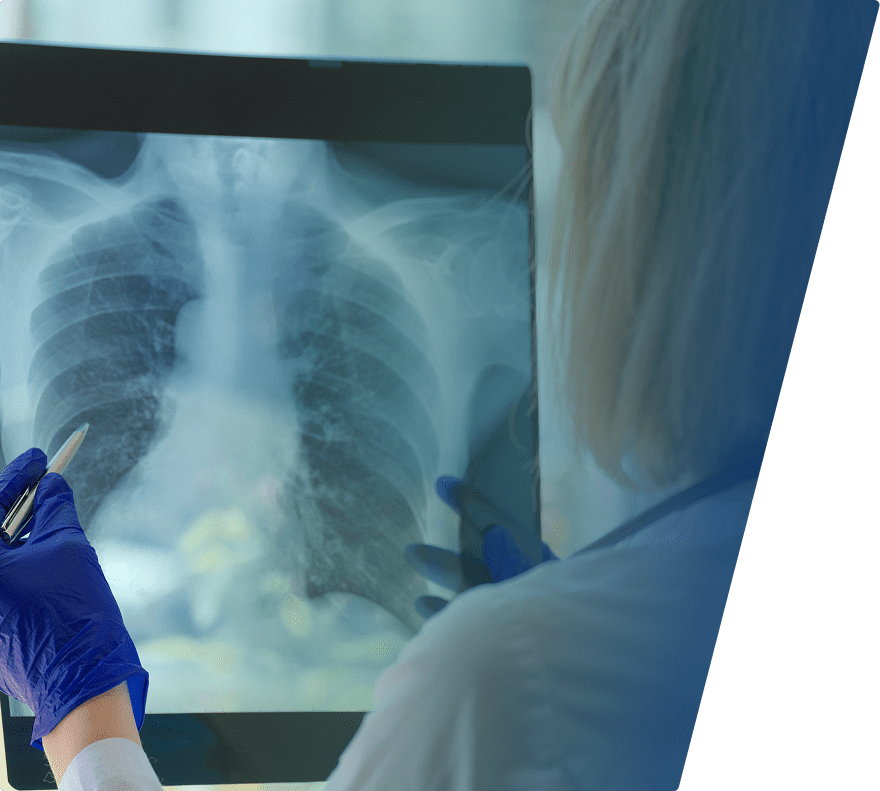
A medical professional wearing blue gloves is holding and examining a chest X-ray film showing the ribcage, lungs, and heart area. The person is pointing at the X-ray with a pen.

Many of the early symptoms of mesothelioma are more likely to be caused by other conditions, so at first people may ignore them or mistake them for common, minor ailments. Most people with mesothelioma have symptoms for at least a few months before they are diagnosed.

You may not experience cancer symptoms for 20 to 50 years after your first exposure to asbestos. Once asbestos fibers reach the lining of pleura (lungs), peritoneum (abdomen) or pericardium (heart), and irritate the cells, the lining starts to thicken. As the cancer develops, the buildup of excess fluid may occur next. Over time, tumors form and place pressure on the organs. Pleural mesothelioma is by far the most common type of malignant mesothelioma.

Symptoms of Pleural Mesothelioma Can Include:

  • Pain in the side of the chest or lower back
  • Cough
  • Excessive sweating
  • Weight loss (without trying)
  • Hoarseness
  • Shortness of breath
  • Fever
  • Fatigue
  • Trouble swallowing (feeling like food gets stuck)
  • Swelling of the face and arms

Symptoms of Peritoneal Mesothelioma Can Include:

  • Abdominal (belly) pain
  • Weight loss (without trying)
  • Constipation
  • Hoarseness
  • Swelling or fluid in the abdomen
  • Nausea and vomiting

The long-term effects of mesothelioma can be devastating, impacting both physical health and quality of life:

Mesothelioma often manifests with symptoms such as chest pain, shortness of breath, coughing, fatigue, and weight loss. These symptoms can worsen over time as the cancer progresses.

As the cancer grows and spreads, it can impair lung function, leading to increased difficulty breathing and reduced oxygen intake. This can significantly affect a person’s ability to perform daily activities and may require interventions like oxygen therapy.

Mesothelioma can cause significant pain and discomfort, particularly as it progresses. Pain management strategies such as medication, radiation therapy, or palliative procedures may be necessary to alleviate symptoms and improve quality of life.

Depending on the location and stage of the cancer, mesothelioma can affect the function of nearby organs. For example, pleural mesothelioma (affecting the lining of the lungs) can compress the lungs and lead to respiratory distress, while peritoneal mesothelioma (affecting the lining of the abdomen) can cause digestive issues and bowel obstruction.

Coping with a mesothelioma diagnosis and its long-term effects can take a toll on mental health. Feelings of anxiety, depression, fear, and uncertainty are common, both for the person diagnosed and their loved ones. Seeking support from mental health professionals, support groups, or counseling services can be beneficial.

Mesothelioma and its treatment can significantly impact overall quality of life. The physical symptoms, emotional distress, financial strain, and lifestyle changes associated with the disease can diminish one’s ability to enjoy daily activities and maintain social connections.

Mesothelioma is often diagnosed at an advanced stage, which can limit treatment options and affect prognosis. Despite advancements in treatment, the overall prognosis for mesothelioma remains poor, with relatively low long-term survival rates compared to other cancers.

Even after treatment, there’s a risk of mesothelioma recurrence. Regular follow-up appointments and imaging tests are typically recommended to monitor for any signs of cancer recurrence and to manage symptoms effectively.

At SWMW Law, we’re more than legal advocates — we’re a source of support during the most difficult times in our clients’ lives. We’re proud to be trusted by families across the country, and even prouder to share what they have to say about working with us.

  • “SWMW did an amazing job! They started the process with my father but during the process my father passed. They were so helpful when it came to us, his children, taking over in place of my dad. They answered every call and were extremely patient and supportive of us. They really did a great job with keeping us informed and educated. They fought for us. I would recommend them to anyone that hears the diagnosis of Mesothelioma. They will fight for you 100% of the way. Thank you SWMW Team for your support and patience! We truly appreciate all of you! – The Anderson’s”

    Cristina Anderson
  • I would personally like to thank you and your staff for how you’ve have helped me and my family with a bit of our loss. It doesn’t bring my dear wife back, but it helps relieve some of our daily stress as we push on. Thank you.

    Gregory U.
  • Everyone at SWMW Law have went above & beyond. They’ve been so compassionate & so very helpful. I really didn’t think I would be getting anything for my late husband. I feel like they have found every way possible to get something in the memory of my late husband. He didn’t deserve to pass the way he did, & SWMW Law are making sure his death wasn’t in vain. Ty you to Lyndsy & everyone who has put long hours into helping me. My deepest appreciation to you all.

    Jeanne M.
  • I am very impressed with the quality of work that SWMW Law has done for me. All of my questions were answered quickly and everyone I had contact with were very kind and professional. I would highly recommend this law firm. Thanks to everyone at the firm for all that you have done for me.

    Deborah B.
  • I cannot say enough wonderful things about the SWMW Law Firm. This firm has a team of amazing, smart and professional attorneys and staff. They really care about their clients and go above and beyond to obtain justice. If I could give them more than 5 stars I would!! Thank you all for your incredible work that you do!

    Nicole O.

Mesothelioma is uncommon, and there are no widely recommended screening tests for this cancer in people who are not at increased risk. (Screening is testing for cancer in people who don’t have any symptoms.)

For people with known exposure to asbestos, some doctors recommend imaging tests such as chest x-rays or computed tomography (CT) scans to look for changes in the lungs that might be signs of mesothelioma or lung cancer. But it is not clear how useful these tests are in finding mesothelioma early.

In the last few years, doctors have found that people with mesothelioma typically have elevated levels of certain substances in their blood, including osteopontin and soluble mesothelin-related peptides (SMRPs). In the future, blood tests for these substances may be useful in detecting mesothelioma early, as well as for monitoring the course of the disease.

Most mesotheliomas are found when a person goes to a doctor because of symptoms. People who have been exposed to asbestos should know the possible signs and symptoms of mesothelioma. Many of these symptoms are more likely to be caused by something other than mesothelioma, but it’s important to report any new symptoms to your doctor right away so that the cause can be found and treated, if needed.

Cancer specialists utilize a number of diagnostic tools to accurately confirm mesothelioma, including blood tests such as MESOMARK and SOMAmer panel, imaging tests such as MRIs, CT scans, PET scans, x-rays and biopsies to investigate cancerous growth in tissue samples.

Providing your doctor with a comprehensive work history can accelerate the diagnostic process. Because mesothelioma is a rare cancer with nonspecific symptoms, doctors are unlikely to suspect the disease unless you describe a former job where asbestos exposure may have occurred.

By explaining to your doctor that you worked in a high-risk industry, such as asbestos mining, construction or shipbuilding, you can back up concerns that your symptoms may be asbestos-related.

If you have mesothelioma, call us at 844-857-SWMW or contact us anytime online.

There is no clear path to a mesothelioma diagnosis for every patient. Because the disease is so rare and has such common symptoms, doctors sometimes confuse it for a less-serious illness or a different type of cancer.

Pinpointing the disease involves several procedures, including x-rays, CT scans, MRIs, biopsies and PET scans. Each of these tests is performed by a different medical professional, and most people get their diagnosis within two or three months from the time they notice their symptoms.

Diagnosing the cancer in its earliest stages supports a wider range of treatment possibilities that could extend your life expectancy. So it’s important you start looking for a mesothelioma expert.

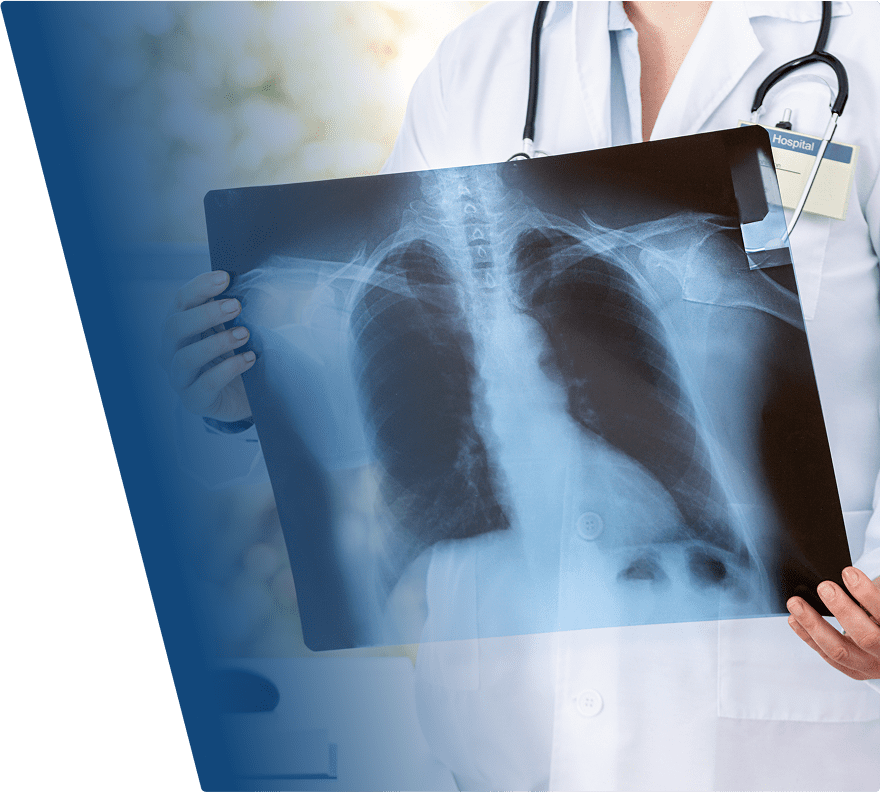
Doctor wearing a white coat and stethoscope holding a chest X-ray film showing the lungs and ribcage. The X-ray is held up for viewing, with a hospital ID badge clipped to the coat.
A modern, minimalist living room with a large gray sectional sofa adorned with various cushions. In front of the sofa is a round coffee table with a black metal frame and a wooden top, holding a small plant and decorative items. The room features a light wood floor and a large window with sheer white curtains, allowing natural light to fill the space. A tall green plant is placed near the window, adding a touch of nature to the room. The overall color palette is neutral with shades of gray, white, and natural wood tones.

Our team is comprised of dozens of highly talented and experienced attorneys ready to fight for your best outcome.

Over the course of our firm’s experience, we have helped thousands of victims and their families recover life-changing verdicts and settlements.

We come to you wherever you are in the United States.

A senior partner of our firm will be involved in your case, utilizing a team approach with massive resources uniquely applied to your case.

Free Consultations Available 24/7